
Our Togo vs Epsom vs Clemence comparison covers the three leathers that carry most modern Birkin and Kelly production. But Hermès' tannery relationships run far deeper — heritage calfskins with decades of history, goatskins prized for their lightness, canvas-leather hybrids built for travel, and exotic skins that occupy an entirely separate market tier. Knowing what each one is, and is not, changes how you shop and what you should expect to pay on resale.
Heritage Calf Leathers
Before Togo and Clemence became the house defaults, Hermès built bags in leathers that today read as distinctly vintage — or as a deliberate, informed choice for buyers who know what they are looking at.
Box Calf
A smooth, glossy, unembossed calfskin that was the classic Kelly leather for decades. It scratches more readily than a grained leather, but the marks it picks up read as patina rather than damage — collectors of vintage Kellys often prefer a well-worn Box calf to a pristine one.
Barenia
A smooth, minimally finished leather that darkens and develops character as it absorbs oils from handling. Barenia pieces are produced in limited runs and hold a genuine following among collectors who value the leather's evolving surface over a uniform finish.
Vache Naturelle
Raw, undyed, vegetable-tanned cowhide. It is highly reactive — water spots, oils and sunlight all leave visible marks — which makes it a leather buyers either specifically seek out or actively avoid. Seen most often on Kelly and travel pieces.
All three demand more deliberate care than Togo or Epsom. Their long-term condition depends heavily on storage and handling habits — see our long-term storage guide for the climate and handling practices that keep sensitive leathers stable.
Chèvre: The Goatskin Alternative
Chèvre (most commonly Chèvre Mysore) is goatskin rather than calfskin, and it feels different in hand: finer-grained, noticeably lighter, and more scratch-resistant than its softness would suggest. It has never carried the ubiquity of Togo, but it stays in steady rotation across bag sizes and small leather goods, and it ages gracefully — the surface tends to soften and mellow rather than crack or dry out. On resale, Chèvre sits in a reliable mid-tier: not as instantly recognisable to casual buyers as Togo, but well understood by anyone who has owned Hermès leather goods for a while.
Swift & Evercolor
Swift is an ultra-smooth, fine-grained calfskin that saturates colour more vividly than almost any other leather Hermès uses — it is frequently the leather chosen for the boldest seasonal shades. The trade-off is durability: Swift scratches and shows handling marks quickly, which is why it tends to be bought for its colour rather than for value retention.
Evercolor answers that weakness directly. It has a similar smooth hand to Swift but carries a light coated finish that meaningfully improves scratch resistance, and it has become increasingly common on smaller leather goods and select bags. It is the practical choice for buyers who want the clean look of a smooth leather without Swift's fragility.
Toile: Canvas-Leather Combinations
Toile pairs a woven cotton canvas body with leather trim, handles and piping — a lighter, more casual construction that Hermès rotates in and out of production rather than offering continuously. The canvas resists scuffing well but can show ground-in dirt and staining more visibly than leather, so trim condition and canvas cleanliness both factor into resale value. Toile pieces attract a specific, casual-leaning buyer, and availability being seasonal rather than constant adds a mild scarcity premium when a desirable colourway appears.
Exotics: Ostrich, Lizard, Crocodile & Alligator
Exotic skins occupy their own tier entirely, priced at multiples of the calfskin leathers above. Each species has a distinct look and a distinct set of care demands.
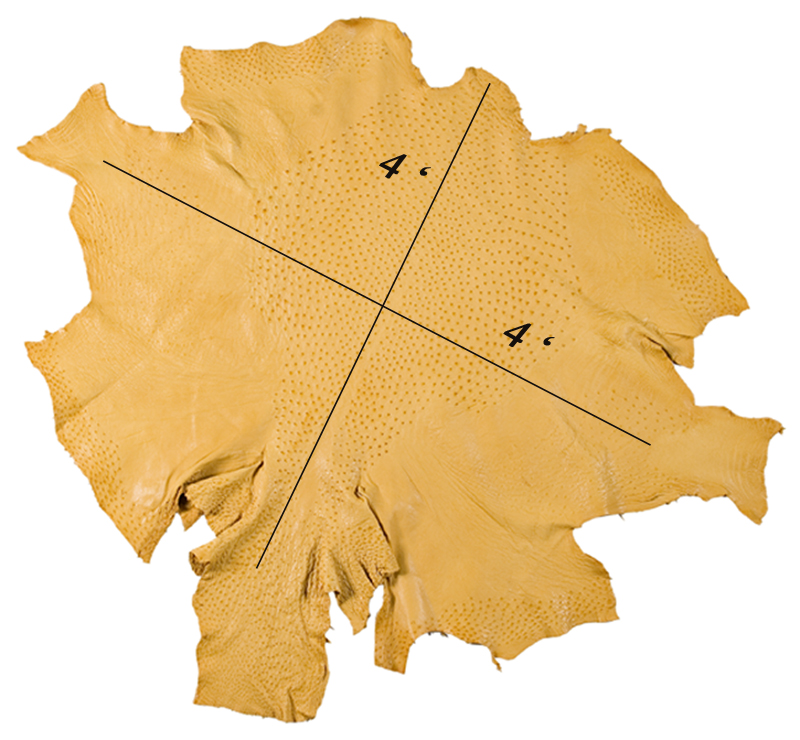
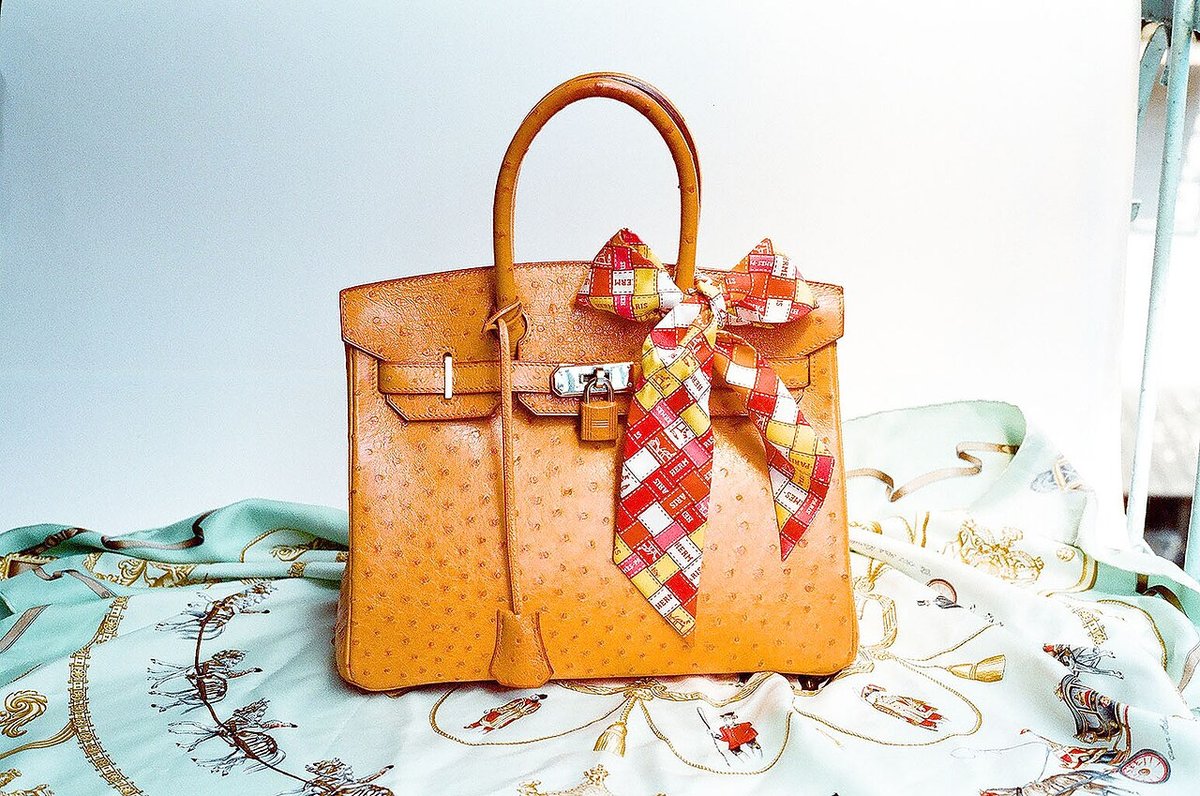
Ostrich
Instantly recognisable for its raised quill follicles. Genuinely durable in daily use, though the quills can crack if the leather is allowed to dry out — conditioning matters more here than on most leathers.
Lizard
Small, tightly-packed scales, seen more often on small leather goods than on full bags because a hide large enough for a bag panel is scarce. Delicate — scales can lift with rough handling — but a large, symmetrical, unblemished piece commands a real premium.
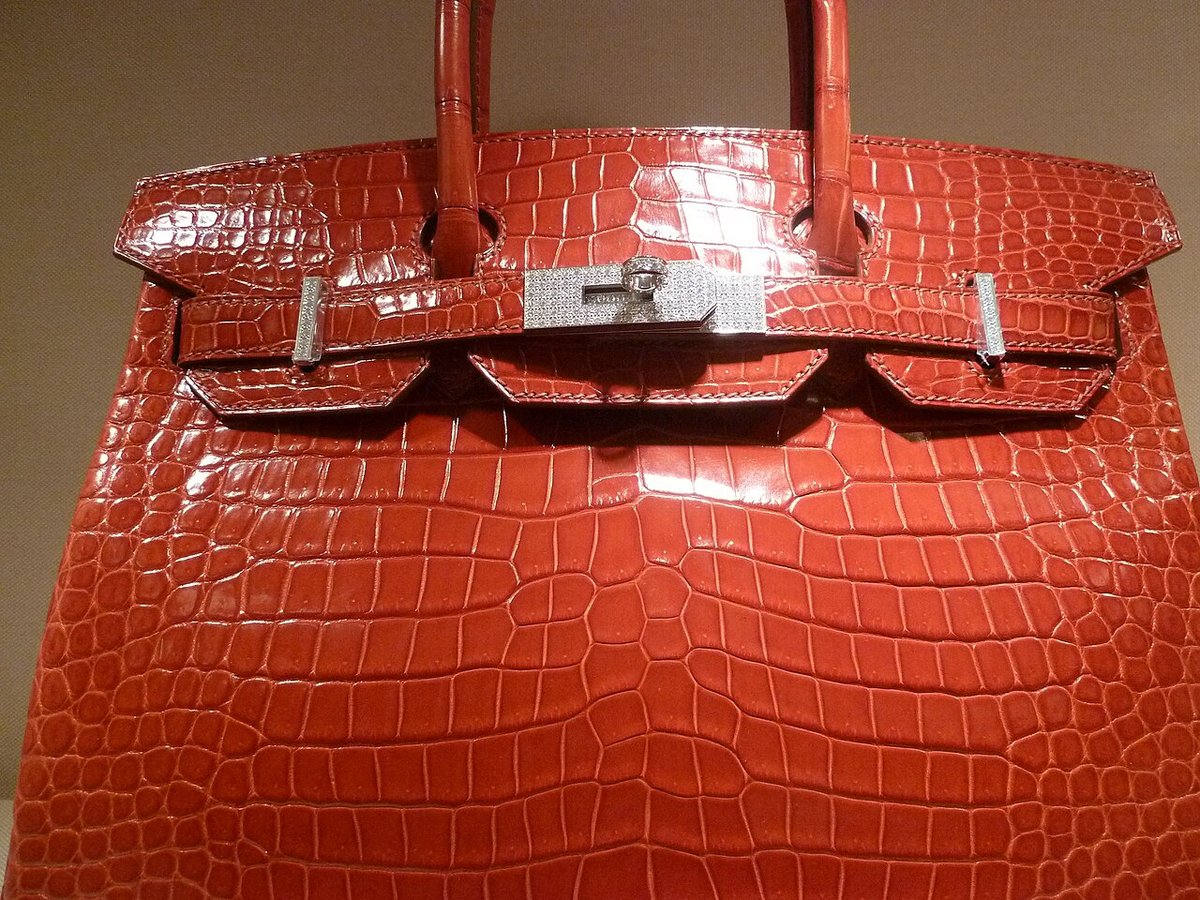
Crocodile and alligator are the two most valuable exotics, and Hermès marks the species directly in the blind stamp area next to the “Hermès, Paris, Made in France” heat stamp. Based on documentation from luxury authentication specialists, the commonly cited markers are: a square symbol for alligator (Alligator mississippiensis, farmed in the United States), a caret (∧) for Crocodile Porosus (farmed in Australia and Southeast Asia), and a double-dot mark for Crocodile Niloticus (Nile crocodile, with a slightly larger, more visibly pored scale pattern). Lizard skins carry their own dash-based markers distinguishing Varanus species. These marks are a useful cross-check during authentication, but they should never be the only thing you rely on — construction, proportions and papers matter just as much.
Scale symmetry is the single biggest driver of value within crocodile and alligator: a hide with evenly sized, evenly spaced scales running the full width of the bag front is worth significantly more than one with visible size variation or off-centre placement.
CITES and Why It Matters for Exotics
Crocodile, alligator and lizard are all species regulated under CITES (the Convention on International Trade in Endangered Species), which means legitimate international trade and, in many jurisdictions, resale requires accompanying documentation. This is not a formality: without valid papers, a genuine exotic-skin bag can become difficult or impossible to sell, ship internationally, or insure at full value. Our receipts and papers guide covers exactly what documentation Hermès does and does not provide, and when a CITES certificate is legally required rather than optional.
Before Buying an Exotic
Confirm the species stamp is consistent with the leather you are looking at, ask directly whether CITES documentation is included or obtainable, and factor cross-border shipping restrictions into your decision — some countries restrict import or export of regulated exotic skins even with valid papers.
Rarity & Resale Reference Table
A working comparison across grain, durability, rarity and resale standing — indicative, and read alongside condition and configuration for any specific bag.
| Leather | Grain / Feel | Durability | Rarity | Resale Note |
|---|---|---|---|---|
| Box Calf | Smooth, glossy, unembossed | Scratches easily; develops patina | Rare in current production — mostly vintage | Sought after in vintage Kellys; condition-sensitive |
| Barenia | Smooth, natural, unfinished surface | Absorbs oils and darkens with wear; marks show | Limited production; prized by collectors | Patina is desirable if even; strong niche demand |
| Vache Naturelle | Raw, undyed, vegetable-tanned | Very reactive to water, oil, sunlight | Uncommon; mostly seen on Kelly and travel pieces | Divisive — buyers who want it pay well; others pass |
| Chèvre (Mysore) | Fine, textured goatskin grain | Lightweight, scratch-resistant for its softness | Steady rotation, not rare, but less common than Togo | Reliable mid-tier demand; ages gracefully |
| Swift | Ultra-smooth, fine-grained calfskin | Scratches and shows wear quickly | Common in newer colourways | Bought for colour, not longevity; softer resale |
| Evercolor | Smooth with a light coated finish | More scratch-resistant than Swift | Increasingly common on smaller leather goods and bags | Practical alternative to Swift; modest premium |
| Toile (canvas-leather) | Woven canvas body, leather trim | Canvas resists scuffing; can show ground-in dirt | Seasonal availability; not always in production | Casual-market favourite; trim condition drives price |
| Ostrich | Distinctive raised quill follicles | Durable; quills can crack if dried out | Consistently produced but always a separate tier | Strong standing; quill pattern quality matters |
| Lizard | Small, fine scales in tight rows | Delicate; prone to lifting scales with mishandling | Scarce on bags; more common on small leather goods | High per-piece value when large and unblemished |
| Crocodile (Niloticus / Porosus) | Large, symmetrical scales | Robust if conditioned; scale edges can lift | Restricted by CITES quotas; genuinely scarce | Top tier; symmetry, scale size and papers set price |
| Alligator (Mississippiensis) | Rectangular, more uniform scale pattern | Slightly more forgiving than crocodile | Farmed under quota; scarce relative to calfskins | Top tier alongside crocodile; symmetry commands premium |
Every leather here can be authenticated correctly or dangerously mislabelled — the difference is expertise. Our authentication service verifies leather type alongside construction and stamp before any sale goes through.
Explore Leathers in Real Offers
Our collection lists the exact leather on every listing, from Togo to crocodile — filter to find the specific rarity you are after.